
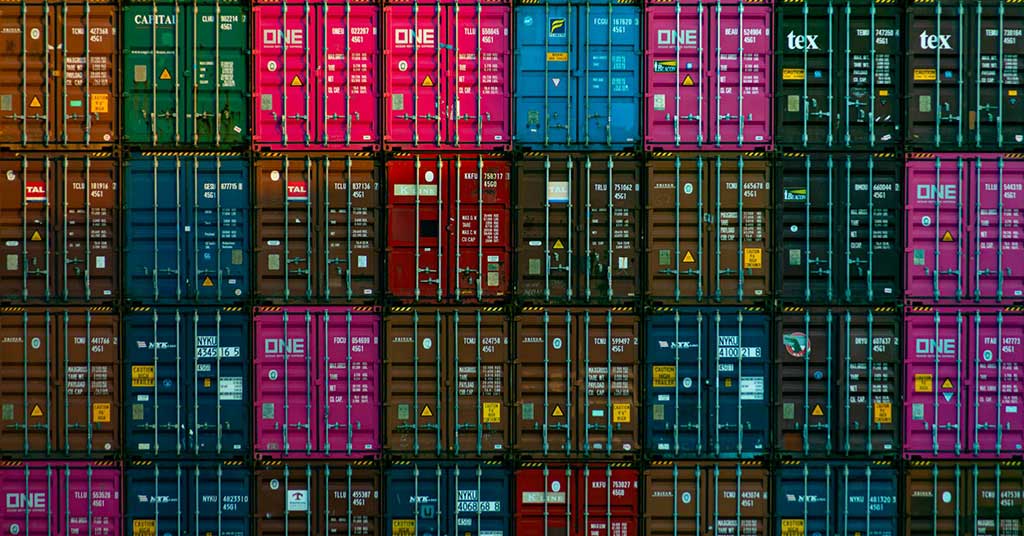
Governments rig the rules to protect favoured industries, then leave businesses and consumers to pay the price
As governments impose more tariffs, quotas and other trade restrictions, businesses and consumers are paying the price. Yet the benefits of free trade are often poorly understood. At its simplest, international trade is no different from everyday buying and selling.
A homeowner may pay a local youth to mow her lawn or shovel snow. She could do it herself but chooses to hire someone. The teenager gains cash, the homeowner a mowed lawn or clean driveway.
This sort of “win-win” happens in commercial, financial, digital and personal transactions. People or firms can do multiple things satisfactorily but pay others to do some of them. Economic diversification causes specialization of skills, spawning exchange rather than self-sufficiency.
Canada imports fruits and vegetables it cannot grow year-round or at all. Canadian firms export what others cannot produce cheaply, or at all: potash, oil, natural gas, uranium, lumber, electric power or pulp and paper. Economists call these differences absolute or comparative advantages. Canada’s natural resources give it advantages in producing many of those commodities.
Until recently, Canadian steel and aluminum producers sent metals to American fabricators to transform into components such as railings, ducts and beverage can materials, then sold the final products to Canadian customers. This is comparative advantage: Canadian manufacturers delegated fabrication to U.S. firms.
U.S. tariffs damaged that relationship, as all sides faced higher, government-imposed costs. Importers pay the tariffs and may pass some of those costs on to customers through higher prices.
Canada previously had a comparative advantage in steel and motor vehicle production. Partly finished products crossed the border several times duty-free under the United States-Mexico-Canada Agreement (USMCA). Washington’s new tariffs wrecked that arrangement. The result: steel and auto plants in Canada are suspending production, laying off workers and facing the prospect of going under.
Protectionism is hardly a new idea. The U.S. adopted mercantilism, an imperial-era policy based on the belief that a nation “profits” when its exports exceed its imports, producing a trade surplus. European colonies shipped commodities to the mother country, which turned them into higher-value products and sold them domestically and to those same colonies.
Mercantilism necessitates protectionism: high duties on imported goods. Manufacturers profited, as they faced neither domestic competition from lower-cost foreign rivals nor competition in their colonies.
The United States had no colonies until 1898 but raised high tariff barriers in 1861 as its Civil War started. The U.S. rapidly industrialized, building or deploying numerous productivity-boosting inventions. U.S. economic growth soared. The global economy grew 146 per cent from 1870 to 1920.
But growth under protectionism does not establish that protectionism caused it. A paper by Douglas Irwin of Dartmouth College for the U.S. National Bureau of Economic Research found “… (i) late nineteenth century growth hinged more on population expansion and capital accumulation than on productivity growth; (ii) tariffs may have discouraged capital accumulation by raising the price of imported capital goods; (iii) productivity growth was most rapid in non-traded sectors (such as utilities and services) whose performance was not directly related to the tariff.”
The Great Depression began in 1929 and prompted countries around the world to adopt protectionist policies. Nations that devalued their currencies suffered less during the 1930s; the others raised trade barriers.
After the Second World War, the winners founded the General Agreement on Tariffs and Trade (GATT), which evolved into the World Trade Organization (WTO). Trade grew faster than world GDP and raised nations out of poverty.
Canadian telecom, dairy, airline and banking studies show that protecting favoured sectors limits competition and keeps prices high. U.S. carrots-and-sticks aimed at encouraging investment in domestic production rather than imports have thus far shown meagre success. Shifting tariff rates, uncertainty about how long they will remain in place and other rules make investors hesitant to commit.
Protecting industries from competition does not make them more competitive. It only shifts the costs to businesses and consumers.
Ian Madsen is a senior policy analyst at the Frontier Centre for Public Policy. A Chartered Financial Analyst (CFA) with an MBA in Finance and extensive experience managing institutional investment portfolios, Ian specializes in complex financial valuation models and economic analysis. He is a former president of the Saskatchewan and Edmonton CFA Societies and has spent decades advising on North American financial markets.
Explore more on Protectionism, Trade, Competition
The views, opinions, and positions expressed by our columnists and contributors are solely their own and do not necessarily reflect those of our publication.
Troy Media empowers Canadian community news outlets by providing independent, insightful analysis and commentary. Our mission is to support local media in helping Canadians stay informed and engaged by delivering reliable content that strengthens community connections and deepens understanding across the country.

